Ethno-STEAM based ReMIS (read, make video, identify, solve problem) learning model to improve critical thinking abilities and digital literacy
DOI:
https://doi.org/10.31629/mg65bw50Keywords:
critical thinking, digital literacy, ethno-STEAM, learning model, ReMISAbstract
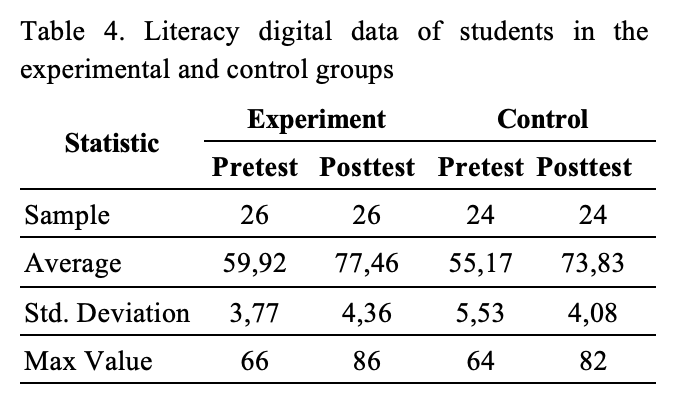
This study aims to describe the effect of the Ethno-STEAM-based ReMIS learning model on students' critical thinking and digital literacy skills. The primary issue of this study is the low level of critical thinking and digital literacy skills in the technological era, which hinders students from analyzing information and adapting to digital-based learning. The method used in this study is a quantitative, quasi-experimental design that directly tests the effect of the Ethno-STEAM-based ReMIS learning model on students' critical thinking and digital literacy skills, employing a pretest and posttest non-equivalent control group design. The research sample employed a purposive sampling method, comprising 26 students from class 2024A and 24 students from class 2024B. The results showed that the application of the Ethno-STEAM-based ReMIS learning model was significantly effective in improving students' critical thinking skills, with an average increase of 79.85 students and an N-Gain of 0.459. The Ethno-STEAM-based ReMIS learning model significantly improved students' digital literacy with an average increase of 77.46 and an N-Gain of 0.418. The implementation of the Ethno-STEAM-based ReMIS learning model represents a significant learning innovation in higher education, capable of enhancing the quality of students' science learning outcomes through a culturally informed approach.
Downloads
References
Afrina, C., & Zulaikha, S. R. (2024). Low digital literacy in Indonesia: Online media content analysis. 10(2), 374–387. https://doi.org/10.20473/rlj.V10-I2.2024.374-387.
Akbar, P. I. M. (2025). Pengaruh Literasi Digital Terhadap Proses Pembelajaran Mahasiswa Dalam Era Revolusi Industri 4.0. Jurnal MEKOM (Media Komunikasi Pendidikan Kejuruan), 24-29. https://doi.org/10.26858/mkpk.v12i1.6890
Berta D, K. (2021). Analisis kemampuan literasi digital mahasiswa. Edukasi: Jurnal Pendidikan, 19(1), 105–119. https://doi.org/10.31571/edukasi.v19i1
Dhewi, A. S., & Ningrum, W. W. (2021). Strategi literasi digital sebagai sarana penguatan berpikir kritis mahasiswa peminatan jurnalistik. Prosiding Seminar Nasional Pendidikan Sultan Agung (SENDIKSA), 52–75.
Fadila, R. N., Nadiroh, T. A., Juliana, R., Zulfa, P. Z. H., & Ibrahim, I. (2021). Kemandirian belajar secara daring sebagai prediktor hasil belajar mahasiswa pendidikan matematika UIN Sunan Kalijaga. Jurnal Cendekia: Jurnal Pendidikan Matematika, 5(2), 880–891. https://doi.org/10.31004/cendekia.v5i2.457
Hähkiöniemi, M., Hiltunen, J., Jokiranta, K., Kilpelä, J., Lehesvuori, S., & Nieminen, P. (2022). Students’ dialogic and justifying moves during dialogic argumentation in mathematics and physics. Learning, Culture and Social Interaction, 33(January). https://doi.org/10.1016/j.lcsi.2022.100608
Hollenstein, L., & Vogt, F. (2024). Digital education through guided pretend play. Learning and Instruction, 93(September 2023), 101945. https://doi.org/10.1016/j.learninstruc.2024.101945
Husna, F., Azhari, P., Wahyuni, D., Nabila, & Wandira, S. A. (2024). Inovasi kurikulum pendidikan. Ar-Raudah: Jurnal Pendidikan Dan Keagamaan, 2(1), 61–69. https://ojs.staira.ac.id/index.php/raudah
Hutapea, B., Sutiawan, I., Magalhaes, A. D. J., Bere, A., Mertayasa, I. K., Sianipar, D., Tahu, F., Pikoli, M., Hilir, A., Septrisia, R., Hapsari, S., & Sukamto, K. (2023). Desain kurikulum pembelajaran abad 21. In Археология.
Irfan, M. (2023). Tingkat literasi media digital pada mahasiswa pendidikan biologi di era revolusi industri 4. 0, 95–103.
Ismail, M. N. K., Supeno, S., & Rusdianto, R. (2024). Development of web-based modules to improve digital literacy and learning outcomes in science learning. Jurnal Paedagogy, 11(3), 451. https://doi.org/10.33394/jp.v11i3.11133
Laakso, N. L., Korhonen, T. S., & Hakkarainen, K. P. J. (2021). Developing students’ digital competences through collaborative game design. Computers and Education, 174(August 2020), 104308. https://doi.org/10.1016/j.compedu.2021.104308
Martawijaya, M. A., Rahmadhanningsih, S., Swandi, A., Hasyim, M. E. H. S. (2023). The effect of applying the ethno-stem-project-based learning model on students’ higher-order thinking skill and misconception of physics topics related to Lake Tempe, Indonesia. 12(1), 1–13. https://doi.org/10.15294/jpii.v12i1.38703
Moravec, V., Hynek, N., Gavurova, B., & Rigelsky, M. (2024). Who uses it and for what purpose? The role of digital literacy in ChatGPT adoption and utilization. Journal of Innovation & Knowledge, 9(4), 100602. https://doi.org/10.1016/j.jik.2024.100602
Nisrina, I., Saputra, H., & Efendi, R. (2024). Implementation of discovery learning model assisted by e-module to improve students’ critical thinking skills on global warming material quantitative study. Jurnal Pendidikan Fisika Dan Teknologi, 10(2), 348–358. https://doi.org/10.29303/jpft.v10i2.7516
Nursyamsi, & Rahman, S. R. (2023). Analisis profil keterampilan berpikir kritis mahasiswa pendidikan biologi pada materi germinasi. BIOMA. 5(2), 126–135.
Putranto, A., Gandariani, T., Siregar, Y. A., & Khaerudin, R. B. (2025). Keterkaitan Tingkat Literasi Digital dan Kemampuan Berpikir Kritis di Kalangan Mahasiswa Era Society 5.0: Penelitian. Jurnal Pengabdian Masyarakat dan Riset Pendidikan, 4(1), 2532-2539. https://doi.org/10.31004/jerkin.v4i1.1994
Prabawati, M. A., Yamtinah, S., Bramastia, B., & Sidiq, A. S. (2023). Literature Review: Pembelajaran IPA Bermuatan Ethno-STEAM sebagai Upaya Pemberdayaan Kemampuan Berpikir Kreatif Siswa Kurikulum Merdeka. In Prosiding SNPS (Seminar Nasional Pendidikan Sains) (pp. 166-179).
Raj, D., Khanal, J., Prasad, K., Chapai, S., & Prasad, K. (2025). International journal of educational research open the impact of digital resource utilization on student learning outcomes and self-efficacy across different economic contexts: A comparative analysis of PISA, 2022. International Journal of Educational Research Open, 8(January), 100443. https://doi.org/10.1016/j.ijedro.2025.100443
Reddy, P., Sharma, B., & Chaudhary, K. (2020). Digital literacy: A review of literature. International Journal of Technoethics, 11(2), 65–94. https://doi.org/10.4018/IJT.20200701.oa1
Ririen, D., & Heriasman, H. (2021). Does self-management affect students’ digital literacy? evidence from a campus in Riau Province. Jurnal Kependidikan: Jurnal Hasil Penelitian Dan Kajian Kepustakaan Di Bidang Pendidikan, Pengajaran Dan Pembelajaran, 7(4), 946. https://doi.org/10.33394/jk.v7i4.4333
Saija, M., Rahayu, S., Fajaroh, F., & Sumari. (2022). Enhancement of high school students’ scientific literacy using local-socioscientific issues in oe3c instructional strategies. Jurnal Pendidikan IPA Indonesia, 11(1), 11–23. https://doi.org/10.15294/jpii.v11i1.33341
Sekarrini, L., Mekar, N., & Bogor, C. (2020). The impact of smartphone usage in adolescents 15-24 years old in jabodetabek region. 1, 103–111. https://doi.org/10.20473/ijph.vl15il.2020.103-111
Setiadi, P. M., Alia, D., & Nugraha, D. (2022). Pengembangan bahan ajar digital dalam blended learning model untuk meningkatkan literasi digital mahasiswa. Edukatif: Jurnal Ilmu Pendidikan, 4(3), 3353–3360. https://doi.org/10.31004/edukatif.v4i3.2727
Shatila, K., Aránega, A. Y., Soga, L. R., & Hernández-Lara, A. B. (2025). Digital literacy, digital accessibility, human capital, and entrepreneurial resilience: a case for dynamic business ecosystems. Journal of Innovation & Knowledge, 10(3). https://doi.org/10.1016/j.jik.2025.100709
Shoba, M. T., Hardianti, R. D., & Pamelasari, S. D. (2023). Penerapan pendekatan socio-scientific issue (SSI) berbantuan modul elektronik terhadap kemampuan berpikir kritis siswa. Seminar Nasional IPA XIII “Kecermelangan Pendidikan IPA Untuk Konservasi Sumber Daya Alam,” 571, 571–579.
Sholihah, M., Zubaidah, S., Mahanal, S., & Listyorini, D. (2025). The effect of reading-concept mapping-reciprocal teaching on students’ communication skills. Journal of Education and Learning, 19(1), 158–168. https://doi.org/10.11591/edulearn.v19i1.21765
Sumarni, W., & Kadarwati, S. (2020). Ethno-stem project-based learning: Its impact to critical and creative thinking skills. Jurnal Pendidikan IPA Indonesia, 9(1), 11–21. https://doi.org/10.15294/jpii.v9i1.21754
Sumarni, W., Kadarwati, S., & Susilaningsih, E. (2025). Ethno-STEAM science learning to improve prospective teachers’ creative thinking and problem-solving skills. 22(3), 488–507.
Wahyuni & Irmawati. (2024). Efektivitas penggunaan youtube sebagai media pembelajaran matematika. Jurnal Konatif: Jurnal Ilmiah Pendidikan, 2(1), 1–14.
Zan, A. M., & Asrizal, A. (2024). Development of Ethno-STEM integrated digital teaching material with augmented reality to promote students’ 21st century skills. Jurnal Penelitian Pendidikan IPA, 10(9), 6798-6808. https://doi.org/10.29303/jppipa.v10i9.8249
Zikrullah, M. (2024). The critical thinking research trend in Indonesia’ s language education journals. DIKSI. 32(1), 107–128.
Downloads
Published
Issue
Section
License
Copyright (c) 2025 Jurnal Gantang

This work is licensed under a Creative Commons Attribution-NonCommercial-ShareAlike 4.0 International License.