Enhancing learners' mathematics achievement by using a gamified flipped classroom instructional strategy
DOI:
https://doi.org/10.31629/f6z3t227Keywords:
gamified learning, flipped classroom, mathematics achievement, active learningAbstract
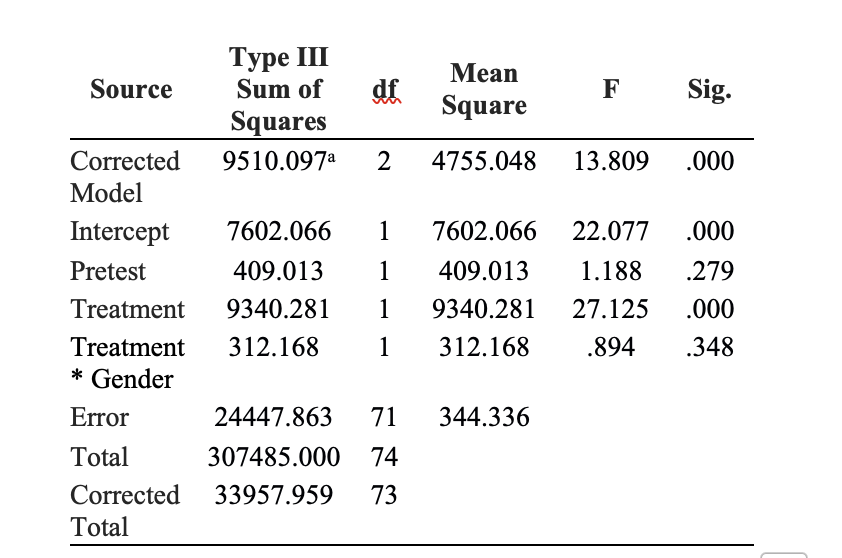
Flipped learning is an educational approach that inverts the traditional teaching pattern by giving pupils access to learning materials before class, while using classroom time to deepen their understanding. However, few studies investigate whether low-basic learners possess the readiness and digital literacy to benefit from this approach. Hence, this study examined the impact of implementing a Gamified Flipped Classroom Instructional Strategy on enhancing mathematics achievement among lower primary learners in Ilorin West Local Government Area of Kwara State, Nigeria. Employing the pre and posttest control group in line with a quasi-experimental design, 74 learners from two private primary schools participated in the research. This study employed three validated research instruments: the Mathematics Achievement Test (MAT), the Guide for Gamified Flipped Classroom Instructional Strategy (GGFCIS), and the Guide for Control Group (GCG). The MAT instrument demonstrated a reliability coefficient of 0.74 using the test-retest method. Two hypotheses were evaluated by using Analysis of Covariance (ANCOVA) at a 0.05 significance level. Results indicated a significant positive effect of the gamified flipped classroom instructional strategy on learners' academic achievement in mathematics. However, no significant interaction between treatment and gender was found. The study concluded that regardless of gender, the instructional strategy improved the academic achievement of lower basic learners in mathematics. The study recommended that primary school teachers undergo training in using the gamified flipped classroom instructional Strategy for teaching mathematics to lower basic primary learners, as it promotes academic success while encouraging parental involvement in learners' learning.
Downloads
References
Alanazi, H. M. N. (2020). The effects of active recreational math games on math anxiety and performance in primary school children: An experimental study. Multidisciplinary Journal for Education, Social and Technological Sciences, 7(1), 89–112.
Aşıksoy, G. (2018). The effects of the gamified flipped classroom environment (GFCE) on students’ motivation, learning achievements and perception in a physics course. Quality & Quantity, 52(1), 129–145. https://doi.org/10.1007/s11135-017-0597-1
Chamboko-Mpotaringa, M., & Manditereza, B. (2023). Innovative language learning approaches: Immersive technologies and gamification. In G. Kartal (Ed.), Transforming the language teaching experience in the age of AI (pp. 189–214). IGI Global. https://doi.org/10.4018/978-1-6684-9893-4.ch011
Chen, L. L. (2016). Impacts of the flipped classroom in high school health education. Journal of Educational Technology Systems, 44(4), 411–420. https://doi.org/10.1177/0047239515626371
Creswell, J. W., & Creswell, J. D. (2018). Research design: Qualitative, quantitative, and mixed methods approach (5th ed.). SAGE.
Deci, E. L., & Ryan, R. M. (1985). The general causality orientations scale: Self-determination in personality. Journal of research in personality, 19(2), 109-134.
Dewey, J. (1938). The philosophy of the arts. John Dewey: The Later Works, 13(357-368).
De-Marcos, L., Domínguez, A., Saenz-de-Navarrete, J., & Pagés, C. (2014). An empirical study comparing gamification and social networking on e-learning. Computers & Education, 75, 82–91. https://doi.org/10.1016/j.compedu.2014.01.012
Desa, N. A., & Halim, N. D. (2022). Flipped classroom in secondary school or high school education: A review of its advantages and challenges. Innovative Teaching and Learning Journal, 6(2), 1–8.
Dichev, C., & Dicheva, D. (2017). Gamifying education: what is known, what is believed and what remains uncertain: a critical review. International journal of educational technology in higher education, 14(1), 9.
Dowker, A., Cheriton, O., Horton, R., & Mark, W. (2019). Relationships between attitudes and performance in young children’s mathematics. Educational Studies in Mathematics, 100, 211–230. https://doi.org/10.1007/s10649-019-9880-5
Elzeky, M. E. H., Elhabashy, H. M. M., & Ali, W. G. M. (2022). Effect of gamified flipped classroom on improving nursing students' skills competency and learning motivation: A randomised controlled trial. BMC Nursing, 21, 316. https://doi.org/10.1186/s12912-022-01096-6
Ganley, C. M., & Lubienski, S. T. (2016). Mathematics confidence, interest, and performance: Examining gender patterns and reciprocal relations. Learning and Individual Differences, 47, 182–193. https://doi.org/10.1016/j.lindif.2016.01.002
Gómez-Carrasco, C. J., Monteagudo-Fernández, J., Moreno-Vera, J. R., & Sainz-Gómez, M. (2020). Evaluation of a gamification and flipped-classroom program used in teacher training: Perception of learning and outcome. PLOS ONE, 15(2). https://doi.org/10.1371/journal.pone.0236083
Güler, M., Kokoç, M., & Bütüner, O. S. (2023). Does a flipped classroom model work in mathematics education? A meta-analysis. Education and Information Technologies, 28(1), 57–79. https://doi.org/10.1007/s10639-022-11143-z
Hew, K. F., Huang, B., Chu, K. W. S., & Chiu, D. K. W. (2016). Engaging Asian students through game mechanics: Findings from two experiment studies. Computers & Education, 92–93, 221–236. https://doi.org/10.1016/j.compedu.2015.10.010
Huang, R., Ritzhaupt, A. D., Sommer, M., Zhu, J., Stephen, A., & Li, J. (2020). The impact of gamification in educational settings on student learning outcomes: A meta-analysis. Educational Technology Research and Development, 68(4), 1875–1901. https://doi.org/10.1007/s11423-020-09807-z
Hultén, M., & Larsson, B. (2018). The flipped classroom: Primary and secondary teachers’ views on an educational movement in schools in Sweden today. Scandinavian Journal of Educational Research, 62(3), 433–443. https://doi.org/10.1080/00313831.2016.1258662
Husain, A. J. A., Al-Shayeb, A. Q., & Khazalah, F. S. (2023). Students’ achievement in a flipped database management course: The impact of flow theory gamification elements. Journal of Information Technology Education: Research, 22. https://doi.org/10.28945/5206
Ikwuka, O. I., & Okoye, C. C. (2022). Differential effects of the flipped classroom and gender on the academic achievement of CEP students in Nigerian federal universities in basic methodology. African Journal of Educational Management, Teaching and Entrepreneurship Studies, 2, 106–117.
Lestari, B., & Noer, S. (2021). The flipped classroom learning strategy with gamification as an alternative learning solution during the COVID-19 pandemic. https://doi.org/10.4108/eai.16-10-2020.2305193
Markovits, Z., & Forgasz, H. (2017). Mathematics is like a lion: Elementary learners’ beliefs about mathematics. Educational Studies in Mathematics, 96, 49–64. https://doi.org/10.1007/s10649-017-9759-2
Ng, L. K., & Lo, C. K. (2022a). Flipped classroom and gamification approach: Its impact on performance and academic commitment on sustainable learning in education. Sustainability, 14(9), 5428. https://doi.org/10.3390/su14095428
Ng, L. K., & Lo, C. K. (2022b). Online flipped and gamification classroom: Risks and opportunities for academic achievement in sustainable adult learning during the COVID-19 pandemic. Sustainability, 14(19), 12396. https://doi.org/10.3390/su141912396
Qing, Y., & Kun, Y. (2023). The effects of gamified flipped classroom on student learning: Evidence from a meta-analysis. Interactive Learning Environments. https://doi.org/10.1080/10494820.2023.2209791
Recabarren, M., Corvalán, B., & Villegas, M. (2023). Exploring the differences between gamer and non-gamer students in the effects of gamification on their motivation and learning. Interactive Learning Environments, 31(6), 3529–3542. https://doi.org/10.1080/10494820.2021.1933543
Russo, J., Bragg, L. A., & Russo, T. (2021). How primary teachers use games to support their teaching of mathematics. International Electronic Journal of Elementary Education, 13(4), 407–419.
Sailer, M., & Sailer, M. (2021). Gamification of in‐class activities in flipped classroom lectures. British journal of educational technology, 52(1), 75-90.
Sen, E. O. (2022). Thematic analysis of articles on flipped learning in mathematics education. Turkish Online Journal of Distance Education, 23(2), 202–222. https://doi.org/10.17718/tojde.1096444
Sivananda, P., & Aziz, A. A. (2021). Utilizing technology to promote active learning: A systematic literature review. International Journal of Academic Research in Progressive Education and Development, 10(3). https://doi.org/10.6007/ijarped/v10-i3/10815
Sulaimon, J. T., & Manditereza, B. (2024). Investigating the effect of the traditional flipped classroom in teaching Primary 3 mathematics. Journal of Education and Practice, 8(1), 1–12.
Sulaimon, J. T., Salaudeen, T. S., & Awoyemi, O. A. (2024). Exploring the effect of creative materials on pupils’ understanding of mensuration concepts in mathematics in Ifelodun, Kwara State. Bayero Journal of Education in Africa, 10(2), 316–327.
Wang, C., Cho, H. J., Wiles, B., Moss, J. D., Bonem, E. M., Li, Q., ... & Levesque-Bristol, C. (2022). Competence and autonomous motivation as motivational predictors of college students’ mathematics achievement: from the perspective of self-determination theory. International Journal of STEM Education, 9(1), 41.
Yildirim, F. S., & Kirayn, N. E. (2016). Flipped classroom model in education. In Research Highlights in Education and Science 2016. https://www.researchgate.net/publication/335756684_FLIPPED_CLASSROOM_MODEL_IN_EDUCA
Yu, L., Jiang, W., Shi, H., Yu, J., Liu, Z., Zhang, Y., ... & Liu, W. (2023). Metamath: Bootstrap your own mathematical questions for large language models. arXiv preprint arXiv:2309.12284.
Zou, D., & Zhang, R. (2021). Flipped primary EFL classrooms: Impact, feasibility and potential. ELT Journal, 75(3), 267–277. https://doi.org/10.1093/elt/ccab017
Downloads
Published
Issue
Section
License
Copyright (c) 2025 Jurnal Gantang

This work is licensed under a Creative Commons Attribution-NonCommercial-ShareAlike 4.0 International License.