Exploration of integrated mathematics learning with teaching factory learning for vocational high school pharmacy students based on design thinking
DOI:
https://doi.org/10.31629/59v99169Keywords:
design thinking, integrated mathematics learning, teaching factoryAbstract
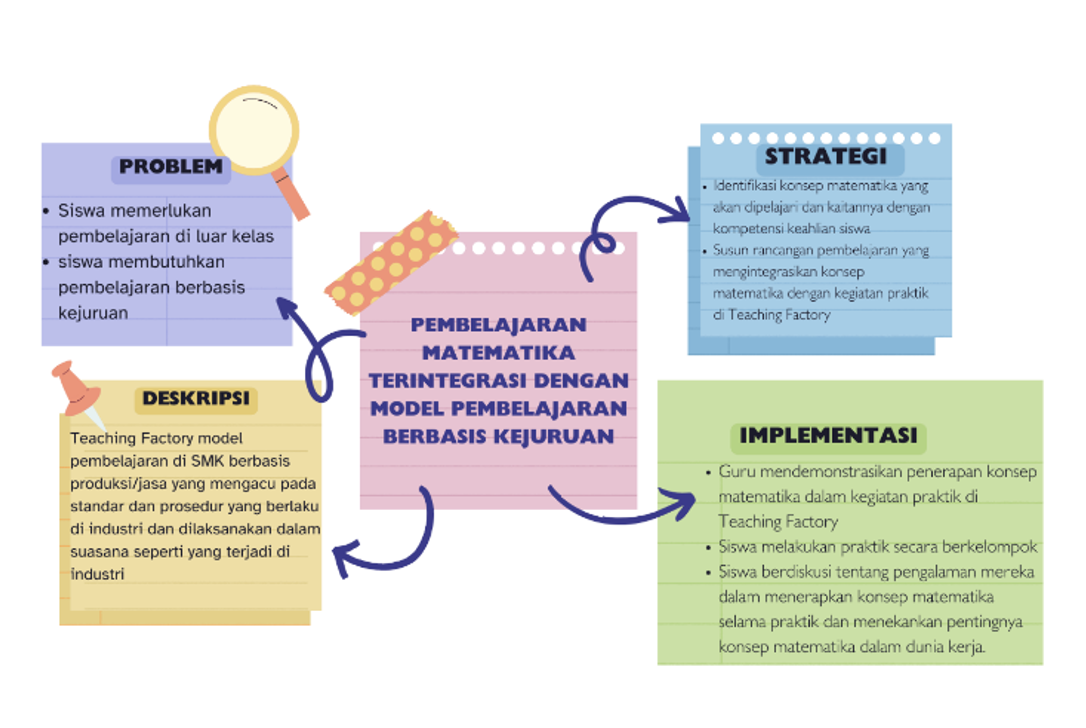
There are still many vocational high school students who struggle with mathematics and need mathematics instruction that is more focused on what they need to support their vocational studies. This study aims to qualitatively and quantitatively explore emerging issues in mathematics learning using the design thinking method, which consists of 5 stages: empathize, define, ideate, prototype, and test. In this research exploration, only the first 3 stages were completed: empathize, define and ideate. The study population consisted of 10th-grade students majoring in pharmacy and mathematics teachers at SMK Al Manaar Muhammadiyah, SMK Amanah Husada, and SMK Media Farma, with 50 10th-grade student respondents and 6 teachers. Quantitative data were collected via a Google Forms questionnaire, while qualitative data were collected through interviews. The data were then analyzed from the empathy stage to the ideate stage, and it was found that students and teachers in mathematics learning need direct practice to support their vocational skills. Therefore, the researcher concludes that it is necessary to integrate mathematics learning into the vocational studies of SMK students, which can involve the active participation of both students and teachers in mathematics learning.
Downloads
References
Peningkatan hasil belajar matematika melalui pembelajaran implementasi kejuruan di SMK Muhammadiyah Lumajang. Jurnal Penelitian Tindakan Kelas Dan Pengembangan Pembelajaran, 5.
Ahmad, D., Setyowati, L., & Nusantari, D. O. (2023). Pengaruh pembelajaran teaching factory terhadap kemampuan berpikir kreatif dan inovatif dengan pendekatan tpack. Jurnal Ilmiah Pendidikan Dasar, 8.
Brawijaya, U., Simanjuntak, Y. N., Wijoyo, S. H., & Herlambang, A. D. (2024). Fakultas ilmu komputer hubungan student engagement dengan prestasi hasil belajar siswa dalam konteks problem-based learning jurusan teknik komputer dan jaringan di SMKN 2 Malang. Jurnal Pengembangan Teknologi Informasi Dan Ilmu Komputer, 1(30), 2548–2964.
Caig, S. D., Hu, X., Graesser, A. C., Bargagliotti, A. E., Sterbinsky, A., Cheney, K. R., & Okwumabua, T. (2013). The impact of a technology-based mathematics after-school program using ALEKS on student’s knowledge and behaviors. Computers and Education, 68, 495–504. https://doi.org/10.1016/j.compedu.2013.06.010
Cantika, B., N & Susetyo, Y. A. (2023). Perancangan UI/UX design aplikasi pemesanan sayur berbasis mobile menggunakan design thinking. Jurnal Sains Komputer & Informatika (J-SAKTI, 7(2), 618–629.
Dam, R. F., & Siang, T. Y., (2025). Stage 2 in the design thinking process: define the problem and interpret the results.
Disas, E. P. (2018). Link and Match sebagai Kebijakan Pendidikan Kejuruan. 231–242. https://doi.org/10.17509/jpp.v18i2.12965
Dunne, D., & Martin, R. (2006). Design thinking and how it will change management education: an interview and discussion. Academy of Management Learning & Education, 5(4). https://doi.org/10.5465/AMLE.2006.23473212
Fatimah, A. T., & Solihah, S. (2021). Desain bahan ajar berbasis agribisnis pengolahan hasil pertanian. 6(November 2020), 25–33.
Febriansari, D., Sarwanto, & Yamtinah, S. (2022). Konstruksi model pembelajaran STEAM (Science, Technology, Engineering, Arts, and Mathematics) dengan pendekatan design thinking pada materi energi terbarukan. JINoP (Jurnal Inovasi Pembelajaran). 8(November), 186–200.
Fitrihana, N. (2018). Rancangan pembelajaran teaching factory. 2(2), 56–64. HEJ (Home Economics Journal), 2(2), 56–64. https://doi.org/10.22219/jinop.v8i2.22456
Kristanto, & Hery, V. (2019). Pengaruh kejenuhan belajar terhadap prestasi belajar siswa dalam pembelajaran matematika. Widya Warta.
Lindberg, T., Noweski, C., & Meinel, C. (2010). Evolving discourses on design thinking: how design cognition inspires meta-disciplinary creative collaboration. Technoetic Arts, 8(1), 31–37. https://doi.org/10.1386/tear.8.1.31/1
Lubis, D. E., Ginting, E. V., Munthe, E. E., & Rahmani, E. (2023). Pengaruh pembelajaran di luar kelas terhadap minat dan hasil belajar matematika siswa di sekolah dasar. Jurnal Pendidikan Tambusai, 7(3).
Mahmuti, A., Hamzic, D. K., & Thaqi, X. (2025). The impact of contextual teaching and learning on improving student achievement in economic mathematics. International Electronic Journal of Mathematics Education, 20(3). https://doi.org/10.29333/iejme/16233
Morley, S. (2024). Skills, jobs, and prosperity: unpacking the economic impact of vocational education.
Nurbayeni, M. (2024). Studi literature riview : kesulitan belajar mahasiswa pendidikan matematika. Jurnal Matematika dan Ilmu Pengelatuan Alam, 2(2), 41-49.
https://doi.org/10.59581/konstanta.v2i2.3071
Pahmi, S., Hudaya, C., & Jaya, A. (2023). Pengaruh model pembelajaran tefa ( teaching factory ) dalam pembelajaran fisika untuk meningkatkan. 9, 1–15. https://doi.org/10.31764/orbita.v9i1.11718
Perdana, N. S. (2018). Evaluasi pelaksanaan pembelaajran model teaching factory dalam upaya peningkatan mutu lulusan. Jurnal Serunai Administrasi Pendidikan, 7(1). https://doi.org/10.37755/jsap.v7i1.116
Putra, D. H., Asfi, M., & Fahrudin, R. (2021). Perancangan UI/UX menggunakan metode design thinking berbasis web pada laportea company. Jurnal Ilmiah Teknologi Informasi Terapan, 8(1). https://doi.org/10.33197/jitter.vol8.iss1.2021.730
Putri, E. S., Permana, D., Yerizon, & Arnawa, I. M. (2023). The developing guided discovery-based learning device for improving middle school students’ mathematics problem-solving ability. Jurnal Gantang, 7(2), 197–204. https://doi.org/10.31629/jg.v7i2.4933
Rapri, H. P., Rokhmawati, R. I., & Hanggara, B. T. (2022). Perancangan dan pengembangan user experience sistem penilaian karyawan 360 derajat PT. Kaltim daya mandiri. Jurnal Pengembangan Teknologi Dan Ilmu Komputer, 6(4), 2548–2964.
Riyadi, S., Jayanti, D. I., & Purwosetiyono, D. (2024). Eksplorasi desain media android untuk meningkatkan kemampuan numerasi siswa dengan metode design thinking. JIPMat, 9(1), 170–179. https://doi.org/10.26877/jipmat.v9i1.495
Riza, A., Sidharta, A., Rokhmawati, R. I., & Priharsari, D. (2022). Perancangan learning management system menggunakan metode design thinking (studi kasus: SMK Prajnaparamita Malang). Jurnal Pengembangan Teknologi Informasi Dan Ilmu Komputer, 6(2), 838–847.
Saputra, D., & Kania, R. (2022). Implementasi design thinking untuk user experience pada penggunaan aplikasi digital. Prosiding The 13th Industrial Research Workshop and National Seminar, 13–14.
Schmarzo, B. (2017). Can design thinking unleash organizational innovation?. Data Science Central a Community for AI Practitioners.
Sumandya, W., & Widana, W. (2022). Reconstruction of vocational-based mathematics teaching materials using a smartphone. Journal of Education Technology, 6(1), 133–139. https://doi.org/10.23887/jet.v6i1.42833
Suryadana, A., Sasongko, D., & Nugroho, S. (2023). Penerapan metode design thinking dalam website waste4change untuk mengoptimalkan fitur pengiriman sampah. Journal of Information System Research (JOSH), 4(3), 820–830. https://doi.org/10.47065/josh.v4i3.3274
Utomo, H., Muhtarom, & Dwijayanti, I. (2024). Eksplorasi media interaktif googles site dengan alur merdeka berbasis design thinking. 4(1), 42–58. https://doi.org/10.51574/jrip.v4i1.1262
Xueting, H., & Ismail, N. (2024). The effects of STEM-PBL mathematics module on secondary vocational students’ mathematical problem-solving skills. In An International Journal (Vol. 16, Issue 2s).
Zaenab, S. (2015). Analisis kemampuan penalaran matematis siswa melalui pendekatan problem posing di kelas X IPA 1 SMA Negeri 9 Malang. In JINoP (Jurnal Inovasi Pembelajaran) (Vol. 1). https://doi.org/https://doi.org/10.22219/jinop.v1i1.2451
Downloads
Published
Issue
Section
License
Copyright (c) 2025 Jurnal Gantang

This work is licensed under a Creative Commons Attribution-NonCommercial-ShareAlike 4.0 International License.