Computational thinking in mathematics education: A systematic review of research trends and pedagogical implementations
DOI:
https://doi.org/10.31629/jg.v11i1.8309Keywords:
computational thinking, mathematics education, systematic literature reviewAbstract
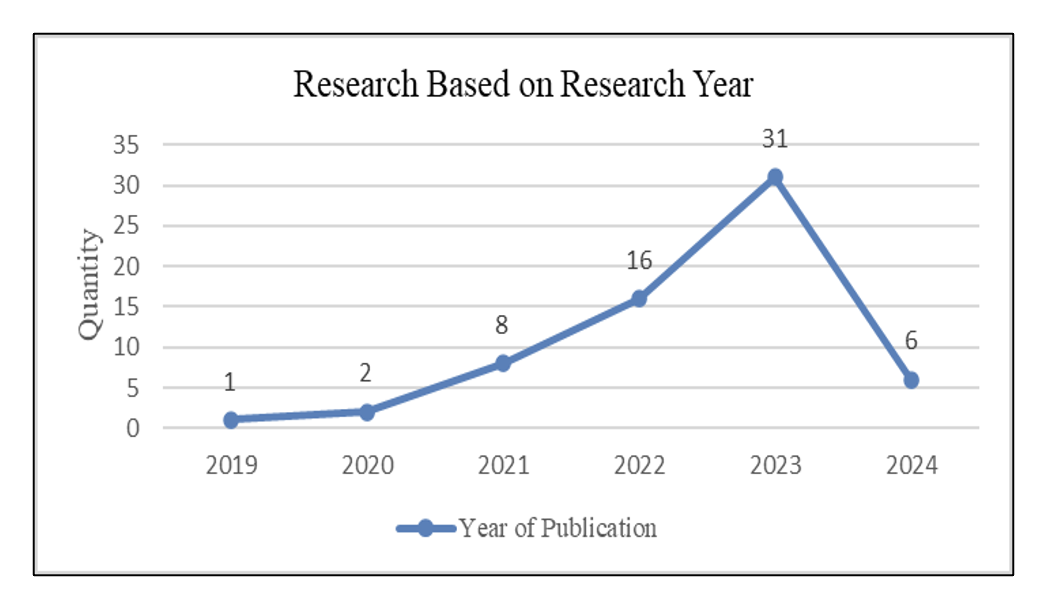
Although computational thinking has become a key competency in mathematics education, a comprehensive understanding of research trends in this field remains limited. This study examines research trends on computational thinking in mathematics education published between 2019 and 2024. A Systematic Literature Review (SLR) was conducted using qualitative studies retrieved through systematic searches in the Scopus bibliographic database and the Google Scholar academic search engine. The review followed predefined inclusion criteria and the PRISMA protocol. The analysis examined publication year, research design, educational level, research location, mathematical topics, instructional models, and computational thinking indicators. The findings show that publications increased substantially between 2021 and 2023, peaking in 2023 (48%). Most studies employed qualitative methods (56%), focused on junior high schools (44%), and investigated number patterns and two-variable linear systems of equations. Problem-Based Learning and Project-Based Learning were the dominant instructional models, while decomposition, pattern recognition, abstraction, and algorithmic thinking were the most frequently examined indicators of computational thinking. These findings provide an updated synthesis of current research trends and offer valuable references for future research and instructional development in mathematics education.
Downloads
References
Afifah, R. N., & Apriyono, F. (2023). Analysis of students’ computational thinking skills on social arithmetic material in terms of adversity quotient. Jurnal Matematika Kreatif-Inovatif, 14(2), 243–253.
Aisy, A. R., & Hakim, D. L. (2023). Kemampuan berfikir komputasi matematis siswa SMP pada materi pola bilangan. Didactical Mathematics, 5(2), 348–360. https://doi.org/10.31949/dm.v5i2.6083
Anggriani, D. L. (2023). Analisis kemampuan berpikir komputasi dalam menyelesaikan soal higher order thinking skill berdasarkan kemampuan numerik siswa kelas VIII pada materi sistem persamaan linear dua variabel di SMP Negeri 2 Jember. UIN Kiyai Ahmad Siddiq Jember. https://doi.org/10.29303/griya.v2i3.217
Angraini, L. M., & Muhammad, I. (2023). Analysis of students’ computational thinking ability in prior mathematical knowledge. Indonesian Journal of Teaching and Learning (INTEL), 2(2), 253–https://doi.org/10.56855/intel.v2i2.308
Angraini, L. M., Yolanda, F., & Muhammad, I. (2023). Augmented reality: The improvement of computational thinking based on students’ initial mathematical ability. International Journal of Instruction, 16(3), 1033–1054. https://doi.org/10.29333/iji.2023.16355a
Ansori, M. (2020). Pemikiran komputasi (computational thinking) dalam pemecahan masalah. Dirasah : Jurnal Studi Ilmu Dan Manajemen Pendidikan Islam, 3(1), 111–126. https://doi.org/10.29062/dirasah.v3i1.83
Augie, K. T. (2021). Penggunaan podcast untuk mengembangkan keterampilan berpikir komputasi siswa selama gangguan pandemi. Didactical Mathematics, 3(1), 41–47. https://doi.org/10.31949/dm.v3i1.1042
Augie, K. T., Fatimah, S., & Prabawanto, S. (2023). Students' learning obstacles in statistics materials related to computational thinking skills. Math Didactic: Jurnal Pendidikan Matematika, 9(2), 213–224. https://doi.org/10.33654/math.v9i2.2103
Azizia, A. J., Kusmaryono, I., Maharani, H. R., & Arifuddin, A. (2023). Students' Computational thinking process in solving PISA problems of change and relationship content reviewed from students' self-efficacy. Eduma : Mathematics Education Learning and Teaching, 12(1), 112. https://doi.org/10.24235/eduma.v12i1.13132
Barr, V., & Stephenson, C. (2011). Bringing computational thinking to K-12. ACM Inroads, 2(1), 48–54. https://doi.org/10.1145/1929887.1929905
Budiarti, H., Wibowo, T., & Nugraheni, P. (2022). Analisis berpikir komputasional siswa dalam menyelesaikan masalah matematika. Jurnal Pendidikan Mipa, 12(4), 1102–1107. https://doi.org/10.37630/jpm.v12i4.752
Candraningtyas, S. R., & Khusna, H. (2023). Computational thinking ability becomes a predictor of mathematical critical thinking ability. Alifmatika: Jurnal Pendidikan Dan Pembelajaran Matematika, 5(2), 247–263. https://doi.org/10.35316/alifmatika.2023.v5i2.247-263
Cockcroft, W. (1982). Mathematics Counts. In the Report of the Committee of Inquiry into the Teaching of Mathematics in Schools in England and Wales.
Dewi, H. L., & Pramesti, S. L. D. (2023). Development of geometry module based on computational thinking assisted by geogebra. Eduma : Mathematics Education Learning and Teaching, 12(1), 88. https://doi.org/10.24235/eduma.v12i1.13265
Dewi, J. P., Lyesmaya, D., & Maula, L. H. (2024). Pengaruh model pembelajaran problem based learning (PBL) terhadap kemampuan berpikir komputasi pada materi pengukuran kelas IV. Pendas: Jurnal Ilmiah Pendidikan Dasar, 09(01), 3275–3285. https://doi.org/10.23969/jp.v9i1.12678
Doleck, T., Bazelais, P., Lemay, D. J., Saxena, A., & Basnet, R. B. (2017). Algorithmic thinking, cooperativity, creativity, critical thinking, and problem solving: exploring the relationship between computational thinking skills and academic performance. In Journal of Computers in Education (Vol. 4, Issue 4, pp. 355–369). https://doi.org/10.1007/s40692-017-0090-9
Findayani, N. K., Suparta, I. N., & Sariyasa. (2023). Development of project-based statistics e-module with scratch assistance to improve students' computational thinking skills. Jurnal Pendidikan MIPA, 24(3), 516–527. https://doi.org/10.23960/jpmipa/v24i3.pp516-527
Kalelioğlu, F. (2018). Characteristics of studies conducted on computational thinking: A content analysis. Computational Thinking in the STEM Disciplines: Foundations and Research Highlights, 11–29. https://doi.org/10.1007/978-3-319-93566-9_2
Kharomah, L., Fitri, A., & Cindarbumi, F. (2023). Efektivitas pendekatan pembelajaran matematika realistik terhadap kemampuan computational thinking siswa. Jurnal AXIOM, 12(2), 154–165. https://doi.org/10.30821/axiom.v12i2.17411
Kitchenham, B., & Charters, S. (2007). Guidelines for performing systematic literature reviews in software engineering. In Keele University and Durham University.
Lee, T. Y., Mauriello, M. L., Ingraham, J., Sopan, A., Ahn, J., & Bederson, B. B. (2012). CTArcade: Learning computational thinking while training virtual characters through game play. Conference on Human Factors in Computing Systems - Proceedings, 2309–2314. https://doi.org/10.1145/2212776.2223794
Lestari, S., & Roesdiana, L. (2023). Analisis kemampuan berpikir komputasional matematis siswa pada materi program linear. RANGE: Jurnal Pendidikan Matematika, 4(2), 178–188. https://doi.org/10.32938/jpm.v4i2.3592
Litia, N., Sinaga, B., & Mulyono, M. (2023). Profil berpikir komputasi siswa dengan menggunakan model pembelajaran problem based learning (PBL) ditinjau dari gaya belajar di SMA N 1 Langsa. Jurnal Cendekia : Jurnal Pendidikan Matematika, 7(2), 1508–1518. https://doi.org/10.31004/cendekia.v7i2.2270
Lye, S. Y., & Koh, J. H. L. (2014). Review on teaching and learning of computational thinking through programming: What is next for K-12? Computers in Human Behavior, 41, 51–61. https://doi.org/10.1016/j.chb.2014.09.012
Maharani, S., Nusantara, T., As’ari, A. R., & Qohar, A. (2020). Computational Thinking Pemecahan Masalah di Abad Ke-21. Ponorogo: Wade Group National Publishing.
Manullang, S. B., & Simanjuntak, E. (2023). Pengaruh model problem-based learning terhadap kemampuan computational thinking berbantuan media geogebra. Journal on Education, 06(01), 7786–7796. https://doi.org/10.31004/joe.v6i1.4127
Marchelin, L. E., Hamidah, D., & Resti, N. C. (2022). Efektivitas metode scaffolding dalam meningkatkan computational thinking siswa smp pada materi perbandingan. Jurnal Pengembangan Pembelajaran Matematika (JPPM), 4(1), 16–28. https://doi.org/10.14421/jppm.2022.41.16-29
Mardiah, A., Ramadoni, R., & Fitri, D. Y. (2023). Analisis kemampuan computational thinking siswa pada materi sistem persamaan linear tiga variabel. J-PiMat : Jurnal Pendidikan Matematika, 5(2), 843–850. https://doi.org/10.31932/j-pimat.v5i2.2811
Mawardi, K., Arjudin, A., Turmuzi, M., & Azmi, S. (2022). Analisis kemampuan pemecahan masalah matematika pada siswa smp dalam menyelesaikan soal cerita ditinjau dari tahapan polya. Griya Journal of Mathematics Education and Application, 2(4), 1031–1048. https://doi.org/10.29303/griya.v2i4.260
Megawati, A. T., Sholihah, M., & Limiansih, K. (2023). Implementasi Computational Thinking dalam Pembelajaran Matematika di Sekolah Dasar. Jurnal Review Pendidikan Dasar: Jurnal Kajian Pendidikan Dan Hasil Penelitian, 9(2), 96–103. https://doi.org/10.26740/jrpd.v9n2.p96-103
Memolo, T. (2022). Pembelajaran matematika berpikir komputasi materi pola bilangan dengan media kalkulator web berbasis javascript. Jurnal Didaktika Pendidikan Dasar, 6(3), 815–826. https://doi.org/10.26811/didaktika.v6i3.854
Miswanto, M., Nusantara, T., As’ari, A. R., & Sukoriyanto, S. (2022). Student computational thinking in solving sequence problems based on learning styles. QALAMUNA: Jurnal Pendidikan, Sosial, Dan Agama, 14(1), 453–470. https://doi.org/10.37680/qalamuna.v14i1.4400
Moher, D., Liberati, A., Tetzlaff, J., Altman, D. G., Antes, G., Atkins, D., … Tugwell, P. (2009). Preferred reporting items for systematic reviews and meta-analyses: The PRISMA statement. PLoS Medicine, 6(7), 1–6. https://doi.org/10.1371/journal.pmed.1000097
Mubarokah, H. R., Pambudi, D. S., Lestari, N. D. S., Kurniati, D., & Jatmiko, D. D. H. (2023). Kemampuan berpikir komputasi siswa dalam menyelesaikan soal numerasi tipe akm materi pola bilangan. JNPM (Jurnal Nasional Pendidikan Matematika), 7(2), 343. https://doi.org/10.33603/jnpm.v7i2.8013
Mukhibin, A., Herman, T., A, E. C. M., & Utomo, D. A. S. (2024). Kemampuan computational thinking siswa pada materi garis dan sudut ditinjau dari self-efficacy. JPMI (Jurnal Pembelajaran Matematika Inovatif), 7(1), 143–152. https://doi.org/10.22460/jpmi.v7i1.21239
Mukhibin, A., & Juandi, D. (2023). The implementation of computational thinking on mathematics learning research: a systematic literature review. Hipotenusa : Journal of Mathematical Society, 5(1), 82–94. https://doi.org/10.18326/hipotenusa.v5i1.9007
Mustafa, M. (2023). Aktivitas siswa dalam memecahkan masalah matematika dengan berpikir komputasi berbantuan chat-gpt. Mathema: Jurnal Pendidikan …, 5(2), 283–298. https://doi.org/10.33365/jm.v5i2.3469
Mustaqimah, U. P. S., & Ni’mah, K. (2024). Profil kemampuan berpikir komputasi siswa SMP pada soal tantangan bebras. JPMI (Jurnal Pembelajaran Matematika Inovatif), 7(2), 297–308. https://doi.org/10.22460/jpmi.v7i2.21590
Nuraisa, D., Saleh, H., & Raharjo, S. (2021). Profile of students’ computational thinking based on self-regulated learning in completing bebras tasks. Prima: Jurnal Pendidikan Matematika, 5(2), 40. https://doi.org/10.31000/prima.v5i2.4173
Nurwita, F., Kusumah, Y. S., & Priatna, N. (2022). Exploring students' mathematical computational thinking ability in solving Pythagorean theorem problems. Al-Jabar : Jurnal Pendidikan Matematika, 13(2), 273–287. https://doi.org/10.24042/ajpm.v13i2.12496
OECD. (2023). PISA 2022 assessment and analytical framework (PISA (ed.)). OECD Publishing.
Ratna, & Yahya, A. (2022). Kecemasan matematika terhadap kemampuan pemecahan masalah matematika siswa kelas XI. Plusminus: Jurnal Pendidikan Matematika, 2(3), 471–482. https://doi.org/10.31980/plusminus.v2i3.1908
Rizki, N., Prayitno, S., Hikmah, N., & Turmuzi, M. (2021). Analisis kemampuan pemecahan masalah matematika siswa kelas IX SMP ditinjau dari gender. Griya Journal of Mathematics Education and Application, 1(3), 328–337. https://doi.org/10.29303/griya.v1i3.71
Sa’diyyah, F. N., Mania, S., & Suharti. (2021). Pengembangan instrumen tes untuk mengukur kemampuan berpikir komputasi siswa. JPMI: Jurnal Pembelajaran Matematika Inovatif, 4(1), 17–26. https://doi.org/10.22460/jpmi.v4i1.17-26
Safitri, N., Putra, Z. H., Alim, J. A., & Aljarrah, A. (2023). The relationship between self-efficacy and computational thinking skills of fifth grade elementary school students. Jurnal Elemen, 9(2), 424–439. https://doi.org/10.29408/jel.v9i2.12299
Siagian, M. D. (2016). Kemampuan koneksi matematik dalam pembelajaran matematika. MES: Journal of Mathematics Education and Science2, 2(1), 58–67.
Silvia, R. D., Pramasdyahsari, A. S., & Nizaruddin, N. (2023). Analisis kemampuan computational thinking siswa pada materi aljabar ditinjau dari pemecahan masalah matematis. Prismatika: Jurnal Pendidikan Dan Riset Matematika, 5(2), 176–190. https://doi.org/10.33503/prismatika.v5i2.2659
Siregar, R., & Malay, I. (2023). Analisis kemampuan berpikir komputasi mahasiswa dalam pembuktian induksi matematika. Journal of Mathematics Education and Science, 9(1), 2023. https://doi.org/10.30743/mes.v9i1.8738
Snyder, H. (2019). Literature review as a research methodology: An overview and guidelines. Journal of Business Research, 104(July), 333–339. https://doi.org/10.1016/j.jbusres.2019.07.039
Sudadi, S., Lolang, E., Ariawan, J., Kusnadi, I. H., & Munir, M. (2023). The effectiveness analysis of computational thinking patterns and levels of students’ meta-cognitive awareness in solving learning problems. Journal on Education, 6(1), 2166–2171. https://doi.org/10.31004/joe.v6i1.3217
Sunendar, A., Santika, S., Supratman, & Nurkamilah, M. (2020). The analysis of mathematics students’ computational thinking ability at universitas siliwangi. Journal of Physics: Conference Series, 1477(4). https://doi.org/10.1088/1742-6596/1477/4/042022
Supiarmo, M. G., Mardhiyatirrahmah, L., & Turmudi. (2021). Pemberian scaffolding untuk memperbaiki proses berpikir komputasional siswa dalam memecahkan masalah matematika. Jurnal Cendekia : Jurnal Pendidikan Matematika, 5(1), 368–382. https://doi.org/10.31004/cendekia.v5i1.516
Syahputra, W. I., & Sinaga, B. (2024). Peningkatan kemampuan berpikir komputasional siswa melalui penerapan odel pembelajaran berbasis proyek. Kognitif: Jurnal Riset HOTS Pendidikan Matematika, 4(1), 1–26. https://doi.org/10.51574/kognitif.v4i1.1157
Utami, R., & Wutsqa, D. U. (2017). Analisis kemampuan pemecahan masalah matematika dan self-efficacy siswa SMP Negeri di Kabupaten Ciamis. Jurnal Riset Pendidikan Matematika, 4(2), 166–175. https://doi.org/10.21831/jrpm.v4i2.14897
Veronica, A. R., Siswono, T. Y. E., & Wiryanto. (2022). Hubungan berpikir komputasi dan pemecahan masalah polya pada pembelajaran matematika di sekolah dasar. ANARGYA: Jurnal Ilmiah Pendidikan Matematika, 5(1), 115–126.
Weintrop, D., Beheshti, E., Horn, M., Orton, K., Jona, K., Trouille, L., & Wilensky, U. (2016). Defining computational thinking for mathematics and science classrooms. Journal of Science Education and Technology, 25(1), 127–147. https://doi.org/10.1007/s10956-015-9581-5
Widiyawati, S., Utari, F. D., Aprinastuti, C., & Setyaningsih, T. W. (2022). Pembelajaran matematika berbasis computational thingking pada materi bangun ruang. Jurnal Pena Edukasi, 9(2), 77. https://doi.org/10.54314/jpe.v9i2.1228
Widodo, S., & Wardani, R. K. (2020). Mengajarkan keterampilan abad ke-21 4C (communication, collaboration, critical thinking, creativity and innovation) di sekolah dasar. Jurnal Program Studi PGMI, 7(2), 185–197. https://doi.org/10.69896/modeling.v7i2.665
Wing, J. M. (2006). Computational thinking. Communications of the ACM, 49(3), 33–35. https://doi.org/10.1145/1118178.1118215
Zahid, M. Z. (2020). Telaah kerangka kerja pisa 2021: era integrasi computational thinking dalam bidang matematika. PRISMA, Prosiding Seminar Nasional Matematika, 3(2020), 706–713.
Downloads
Published
Issue
Section
License
Copyright (c) 2026 Jurnal Gantang

This work is licensed under a Creative Commons Attribution-NonCommercial-ShareAlike 4.0 International License.