
ACCREDITATION
COVER JOURNAL
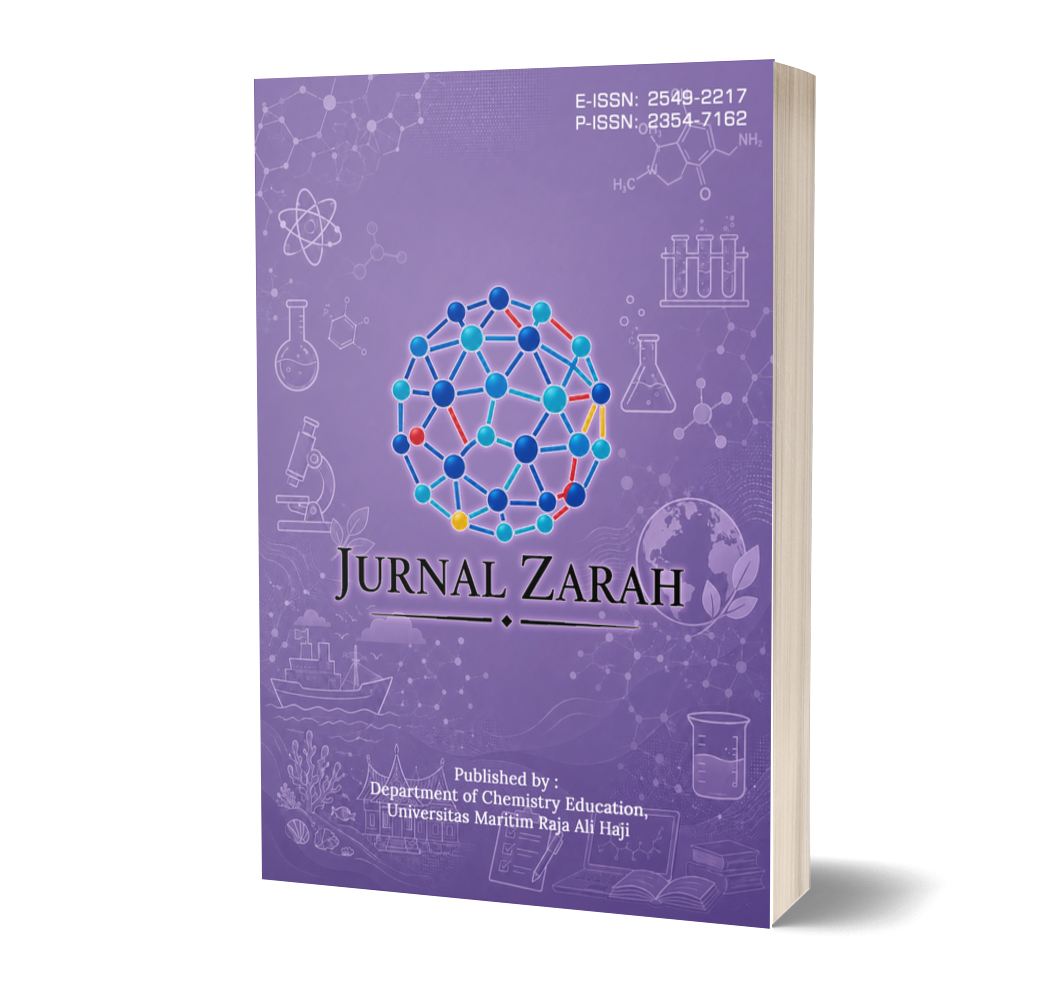
TABLE OF CONTENT
TOOLS





CITATION ANALYSIS
ISSN BARCODE
VISITORS
COLLABORATION

KEYWORDS

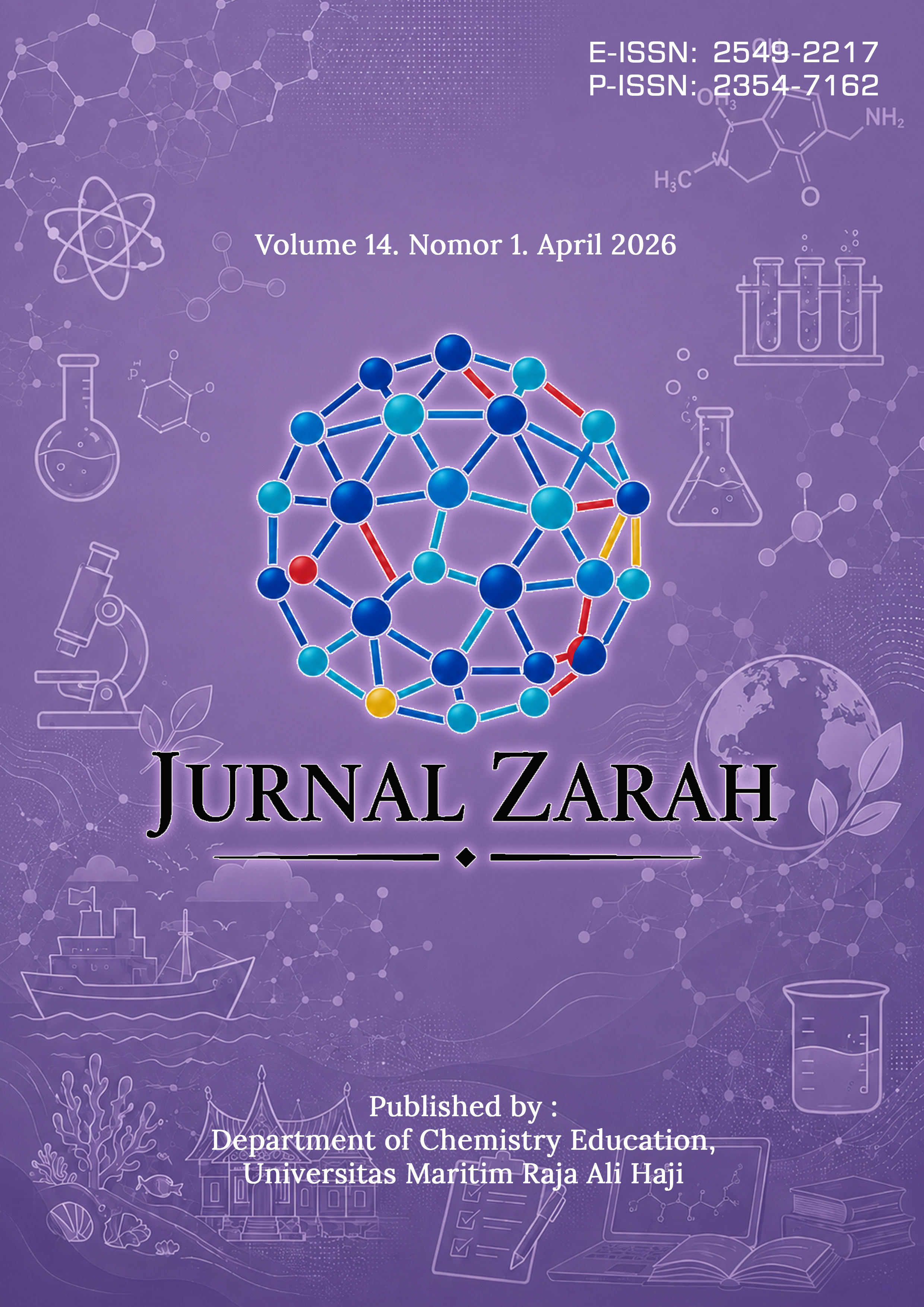
The first article, The Effectiveness of a Local Wisdom-Based E-Module on Chemical Kinetics Toward Students’ Conceptual Understanding and Collaboration Skills, by Sarmian Sitanggang, Zaitun Zaitun, Tety Kurmalasari, and Nevrita Nevrita, discusses the use of a local wisdom-based e-module to improve students’ conceptual understanding and collaboration skills in chemical kinetics learning. The second article, The Chemistry Interest Divide: Male Vs. Female Students at Penajam Paser Utara High School, by Aprilia Sandra Kartika, Mukhamad Nurhadi, and Maasje Catherine Watulingas, explores differences in chemistry learning interest between male and female students and their influence on learning engagement. The third article, Identifying Students’ Misconceptions in Chemical Equilibrium Using a Five-Tier Multiple-Choice Diagnostic Test, by Putri Adita Wulandari, Muhammad Fikri, Abdullah Abdullah, and Tiara Swastika Putri, examines students’ misconceptions in chemical equilibrium using a five-tier diagnostic instrument to support more effective learning. The fourth article, Heavy Metal Bioaccumulation in Seagrass and Sargassum Across Indonesian Coastal Waters: Ecological Risks and Implications for Sustainable Coastal Management: A Systematic Review, by Nur Cholis, Gemala Madumetha, Kusuma Wijaya, Lily Viruly, and Nancy Willian, reviews heavy metal bioaccumulation in Indonesian coastal ecosystems and its implications for sustainable environmental management. The fifth article, Implementation of the Remap-CIRC Learning Model Toward High School Students’ Learning Outcomes in Acid–Base Topics, by Agusto Jeremia Giawa, Sukemi Sukemi, Agung Rahmadani, and Indah Lestari, investigates the implementation of the Remap-CIRC model to improve students’ learning outcomes through collaborative and active learning strategies. The sixth article, The Effectiveness of Digital Game-Based Learning Through EcoFarm Challenge on Students’ Problem-Solving Skills, by Emilia Candrawati, Silvia Syeptiani, and Arsela Eko Listiono, examines the use of a Digital Game-Based Learning model through the EcoFarm Challenge game and shows its effectiveness in improving students’ problem-solving skills. The seventh article, Systematic Review of Chemistry Educational Strategies and Curriculum Integration in Ocean Acidification, by Ardi Widhia Sabekti and Nur Eka Kusuma Hindrasti, reviews research trends in ocean acidification education and highlights innovative strategies and challenges in integrating climate and ocean literacy into educational practice.
Enjoy Reading!!
Jurnal Zarah edisi 1
Jurnal Zarah Science This work is licensed under
a Creative Commons Attribution-ShareAlike 4.0 International License
Published by:
Department of Chemistry Education. Universitas Maritim Raja Ali Haji. Indonesia
Email: [email protected] | Website: Pendidikan Kimia – Fakultas Keguruan dan Ilmu Pendidikan UMRAH