FRP Tank Scrubber Design Optimization Using ASME RTP-1 Standard for Biogas Power Plant: A Case Study of The Tapioca Mill in West Tulang Bawang, Lampung
Keywords:
FRP Pressure Vessels, Biogas Power Plant, H2S Removal,, ASME RTP-1, Scrubber TankAbstract
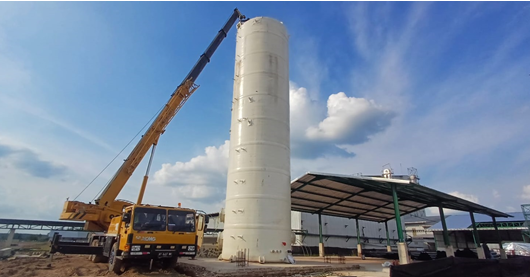
The tapioca processing industry in Indonesia holds massive potential for generating renewable energy through Biogas Power Plants. However, the high toxic and corrosive Hydrogen Sulfide gas content necessitates a reliable purification system. This study aims to design and validate the mechanical integrity and process feasibility of a Fiber Reinforced Polymer (FRP) composite Biological Scrubber tank. The case study was conducted at a facility with a 2000 Nm³/h gas flow capacity, utilizing a tank measuring 3.6 m in diameter and 15 m in height. A comprehensive evaluation was performed using an analytical approach and Python-based computational simulations referencing the ASME RTP-1-2023 standard for FRP pressure vessels. The tank design was optimized using a step-tapered wall configuration to withstand combined hydrostatic, internal pressure (0.05 kg/cm²), wind (22.68 km/h), and Zone 2 seismic loads. Volumetric analysis indicates the reactor dimensions provide an Empty Bed Residence Time of 275 seconds and a superficial gas velocity of 0.055 m/s, optimally maintaining the metabolic stability of the desulfurizing bacteria. Mechanically, the step-tapered wall thickness optimization (20 mm at the base to 10.5 mm at the top) achieved 25% material savings while maintaining a Safety Factor > 10, ensuring the design fully meets strict operational safety standards.